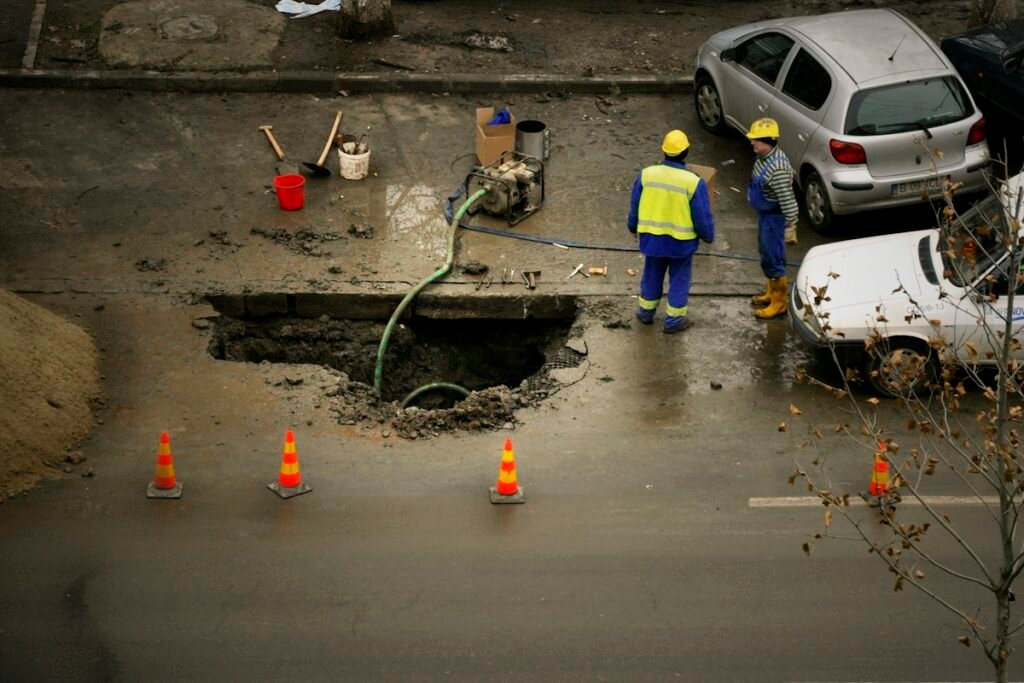
When a drain becomes blocked, one of the first questions is who should arrange and pay for the work. The answer depends on where the blockage is, which properties the pipe serves and whether the pipe is private or part of the public sewer network. It is not safe to assume that every drain outside a home belongs to the homeowner.
This guide explains the usual responsibilities for homeowners, landlords, tenants and water companies in England, including what to check before booking drainage work. If wastewater is backing up or sewage is escaping, keep people and pets away from the affected area and seek help promptly.
Who is responsible for a blocked drain?
In general, the owner is responsible for private drains serving their property alone, while the water and sewerage company may be responsible for public sewers and certain shared drainage pipes. The exact boundary depends on the layout, ownership and type of drainage system, so check with your local water company if you are unsure.
A drain cover being inside your garden does not, by itself, prove that the pipe underneath is your responsibility. Likewise, a blockage near the boundary may still be on a private drain. The safest first step is to identify which fixtures are affected and ask the water company to confirm whether the issue could be in its network.
1. When is the homeowner responsible?
A homeowner will usually need to arrange maintenance or repairs to private drainage that serves only their property. This can include pipework between the home and the point where it connects to a public sewer, along with private drainage systems such as a septic tank or soakaway where present.
Possible signs of a private drainage problem include one property being affected while nearby properties drain normally, a recurring blockage in the same section, or visible damage to private pipework. These signs are clues rather than proof: the location and ownership of the pipe still need to be established.
If the blockage appears to be on your private system, a drain unblocking service can help investigate and clear an obstruction. If the same problem keeps returning, a CCTV drain survey may help identify whether roots, displaced joints or damaged pipework are contributing to it.
2. When should you contact the water company?
Contact your local water and sewerage company if you suspect a public sewer blockage, sewage flooding or a problem affecting more than one property. The company can advise whether the affected pipe is part of its network and what action it can take.
Useful clues include neighbours reporting the same problem, sewage appearing in a public area, or an issue that seems to extend beyond the private drainage serving one home. Do not open heavy manhole covers or enter a drain chamber to investigate. If sewage is overflowing, keep clear and report it promptly.
If you are in the Wessex Water area, consult its guidance on blocked drains and reporting a flood. If you are served by another company, use that provider’s own reporting and responsibility guidance.
3. Who is responsible in a rented property?
For most private tenancies in England, landlords are responsible for keeping the structure and exterior of the property in repair, including drains and external pipes, as well as sanitation installations. The exact legal position can depend on the tenancy and circumstances.
Tenants should tell the landlord or letting agent promptly when a blockage or drainage fault appears, explain which fixtures are affected and provide photos if it is safe to do so. A tenant may be responsible for damage they caused, but should not assume they must pay for every blockage. Landlords should arrange appropriate investigation and repairs rather than delay a problem that could cause damage or affect sanitation.
The government’s private renting repairs guidance explains landlords’ repair responsibilities. Property managers should also keep a record of the report, the affected areas, any contact with the water company and the work arranged.
4. What about shared drains and flats?
Shared drainage can be less straightforward. A pipe may serve more than one property before joining the public sewer, and responsibility can depend on its status and location. In a block of flats, the freeholder, managing agent, lease terms, water company and specialist contractors may all need to be considered.
If several homes or flats are affected, report the issue to the relevant water company and notify the managing agent or landlord. Avoid arranging excavation or repair until the responsible party and the likely location of the fault have been clarified, unless urgent action is needed to make the area safe.
5. What if the property uses a septic tank or soakaway?
Properties that are not connected to the public sewer may use a private system, such as a septic tank or a package treatment plant, with a soakaway or other permitted discharge arrangement. The owner or person responsible for the system will generally need to arrange appropriate maintenance and repairs, subject to any specific agreements or regulatory requirements.
If the system is backing up, producing persistent odours or showing signs of failure, avoid contact with wastewater and get suitable advice. Do not assume a public sewer team can fix a private treatment system. The correct solution depends on the type of installation and the fault.
What should you check before booking a drainage contractor?
- Note which sinks, toilets or other fixtures are affected and whether neighbours have similar symptoms.
- Look from a safe position for visible pooling, overflow or damage; do not lift heavy covers or enter a chamber.
- Contact the water company if you suspect a public sewer issue and ask it to confirm responsibility.
- If you rent, report the problem to your landlord or managing agent as soon as possible.
- For a private drainage issue, explain the symptoms and whether the blockage has happened before when requesting help.
- Keep a record of reports, photographs and any advice or reference numbers you receive.
When can a CCTV drain survey help?
A CCTV survey can be useful when the cause of a recurring blockage is unclear or the pipe may be damaged. A camera inspection can show the condition of accessible pipework and help a drainage professional decide whether a further clearance, repair or relining should be considered. It does not automatically mean that a repair is required.
Find out more about our CCTV drain surveys and drain repair services. The appropriate next step depends on the findings and who is responsible for the affected pipe.
Frequently asked questions
Am I responsible for a drain just because it is in my garden?
Not necessarily. The position of a cover is not enough to establish responsibility. The pipe’s route, what it serves and whether it forms part of a public sewer network all matter.
Does the water company clear every outside drain?
No. Private drains may remain the owner’s responsibility, while public sewers and certain shared pipes may be handled by the water company. Check with the company serving your address if the boundary is unclear.
Can my landlord make me pay for a blocked drain?
Responsibility depends on the cause, the tenancy and the circumstances. Landlords are generally responsible for relevant repairs to drains and sanitation installations, while tenants may be liable for damage they caused. Seek advice if there is a dispute about payment.
What should I do if sewage is overflowing?
Keep people and pets away, avoid touching the wastewater and do not open or enter a chamber. Contact the water company if a public sewer may be involved and arrange urgent professional advice for any private drainage issue.
Need help with a private drainage problem?
Prime Drainage Solutions helps homeowners, landlords and property managers with blocked drains, CCTV surveys and drain repairs across Dorset, Hampshire and the surrounding South of England. If the issue appears to be on your private drainage system, contact our team to discuss the symptoms and the most appropriate next step.
Further guidance: GOV.UK: private renting repairs · Wessex Water: blocked drains · Wessex Water: report a flood.